
Call Us Now:
1800 935 936
If you’ve noticed your diesel engine gradually losing performance or using more fuel than it used to, you’re not alone. Most modern diesels — from the Hilux to the Ranger and LandCruiser — slowly suffer from carbon build-up inside the intake system.
The cause? Oil vapour and soot combining inside your engine’s airways.
The fix? Installing a high-quality oil catch can, like the Australian-engineered BossVent system.
Here’s how it works — and why it helps your diesel maintain the efficiency and power you paid for.
Every internal-combustion engine produces a small amount of blow-by — combustion gases that escape past the piston rings and enter the crankcase.
Those gases carry a fine oil mist, which modern engines vent back into the intake via the PCV (Positive Crankcase Ventilation) system.
At the same time, EGR (Exhaust Gas Recirculation) valves reintroduce exhaust gases to reduce emissions.
When oily vapour from the crankcase meets the soot from the EGR system, it creates sticky carbon sludge.
That sludge coats your intake manifold, intercooler, and valves, restricting airflow and lowering combustion efficiency.
A catch can acts as a filtration system in the crankcase ventilation line.
As blow-by gases pass through the catch can, it filters the oil droplets and contaminants from the air stream.
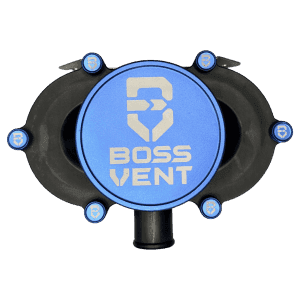
The cleaned air continues into the intake system — but the oil collects inside the can, where it can be easily drained. Bossvent catch cans are the only on the market with a smart in-cabin alert system that warns you when your can needs draining.
By preventing that oil from ever reaching the intake, a catch can:
When your intake system stays clean, your engine can maintain the airflow and combustion efficiency it was designed for.
While a catch can doesn’t increase fuel economy or power, it helps preserve the performance and efficiency your engine had when it was new — by preventing the gradual decay caused by oil vapour contamination.
Over tens of thousands of kilometres, that means your diesel continues to deliver consistent throttle response, smoother towing, and stable fuel consumption — rather than slowly deteriorating as carbon builds up.
Clean airflow also means smoother, more predictable power delivery.
Because the turbocharger and EGR system aren’t fighting against a carbon-coated intake, the engine can maintain:
In short, the power you had on day one — preserved for years to come.
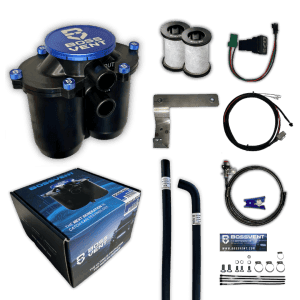
Not all catch cans are created equal. The BossVent Catch Can Kit is designed and tested in Australia for real-world conditions — extreme heat, vibration, and heavy towing.
Key advantages include:
It’s a complete, bolt-on solution built to last the life of your vehicle.
Once carbon build-up takes hold, cleaning the intake can cost thousands — and that’s before factoring in downtime.
Installing a Bossvent catch can early prevents the problem altogether, preserving both fuel efficiency and engine performance.